Puppy Training to Prevent Behavior Problems
Puppy raising can be summed up in six words.
Socialize, socialize, socialize.
Exposure, exposure, exposure.
Pooches raised in isolation (whether it be the dog on a chain in the backyard, or the pug who has never left the house,) develop weird and sometimes scary behavior problems.
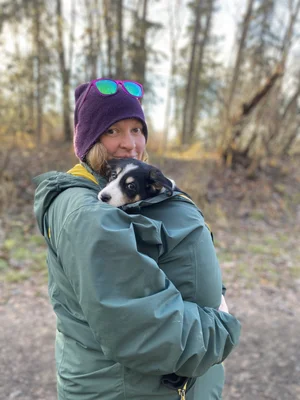
So let’s start with with the first one: socialize. Please do so often with both humans and dogs! Puppies have a prime socialization period between 4 and 14 weeks. During this time puppies are far more likley to feel curiosity rather than fear when exposed to new situations. As a general rule, puppies will tolerate all sorts of weird things that adult dogs will not. For example, when we train avalanche search and rescue dogs, we get them as puppies, and immediately get them on the chair lift-usually in a patroler’s ski coat (the cuteness during this time is borderline intolerable). Frankly, we start exposing them to snowmachines, chair lifts, and even helicopters while they are young. By the time these puppies become adults, they will tolerate any weird new situation we put them in. I’ve rappelled out of a chair with my dog for a training exercise; which confirms my second point: exposure.
Now, I understand most people aren’t raising SAR dogs, but most people do want their dog to be able to greet humans politely. They want their dogs to be able to meet and greet other dogs without a problem. This takes practice and repetition. Take your new pup to your friend’s house, bring them to a farmers market or other big public event. Pass them around at your next family gathering. But expose them to as much as you can while they are cute and adorable. Most people are quick to forgive mistakes in puppies that they would not tolerate in adult dogs. Use that to your advantage. Socializing with humans is half the battle. Socializing with other dogs is equally important, but seems far more scary for most humans. Dog parks, doggy day cares, friends with dogs. I don’t care what you do, just get them out there. A butt sniffing circle is a “Hello, how are you?” in dog language, and the more butts they sniff the better. Greeting “stranger-dogs” is harder than greeting a “friend-dog,” so generally they need more practice with greeting stranger-dogs. But if you want to hike in the woods off leash, greeting stranger-dogs is a mandatory skill set. So get out there and practice.
When I am working with my puppy training clients, their homework includes taking the pup to one new place/event/person a week. More if you have the time to manage it. Lowe’s, Home Depot, Bass Pro, Cabela’s, and any Pet store are places in Anchorage that allow dogs. If the puppy is young, bring a cleaning kit for accidents. Go forth, make mistakes, learn from them, but get out there.
I hope this knowledge finds you well.
Have a Barking Good Day!
*Please note: exposure training in adult or rescue dogs is very different, and can be high risk, please reach out if you need help!